
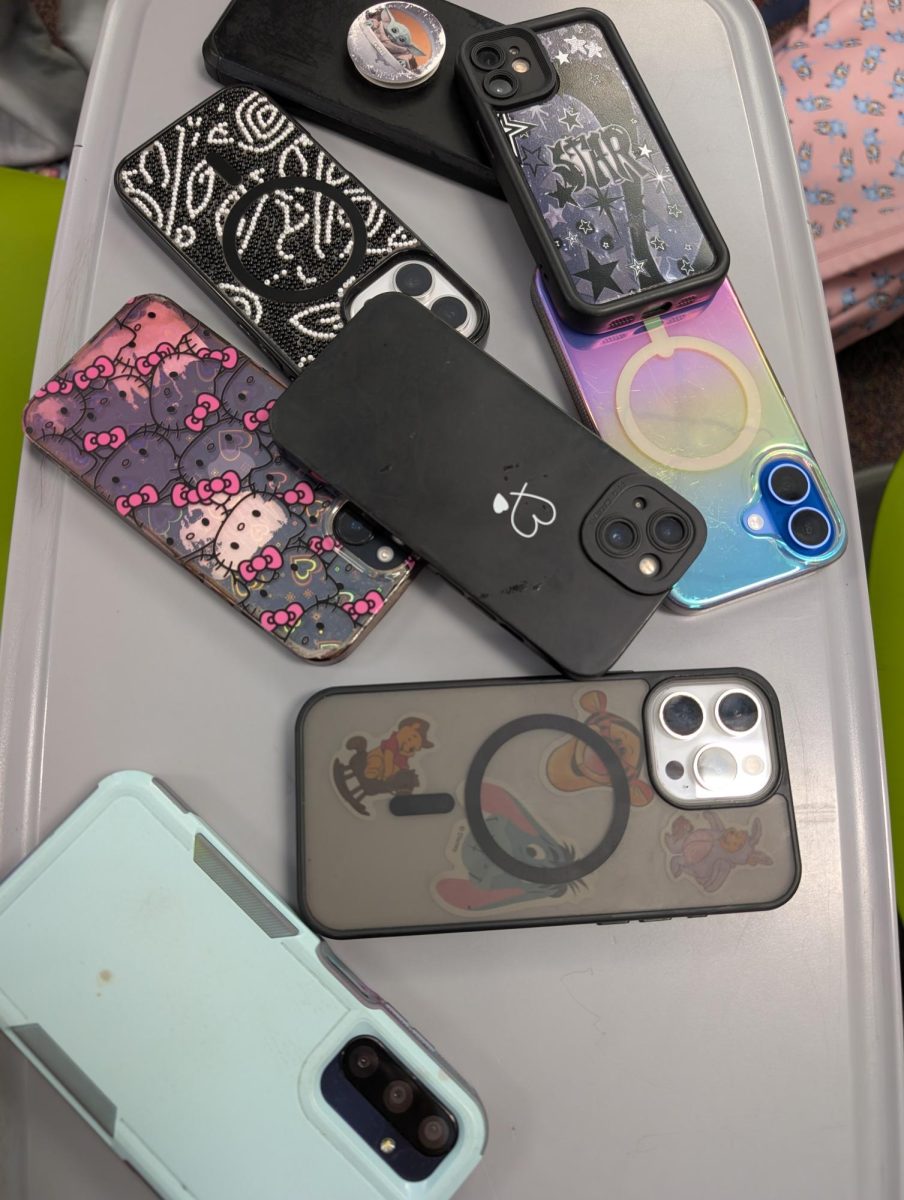
Let’s face it. We are addicted to cellphones. Many students report being on their phones more than four hours a day, and it is common to see fellow students sneak a peek during classes. This year has been a bit different with the cell phone ban, but is it helping?
Banning cell phones at school is helpful because students can use their phones to cheat on classwork and tests in order to get good grades. This reliance on phones for answers may lead students to depend on them all the time, which can cause them to disengage from the lesson and not pay attention in class, assuming they can rely on their phones to do the work for them
Students can also film others students, teachers, or anyone on campus without their consent and post the footage on social media. For example, if a student is using their phone in the locker room while someone is changing, they could take videos or pictures of that student without permission.
However, banning cell phones at school is rather not helpful because, in case of an emergency, a student would need to contact their parents or guardians. Students also need phones or other electronic devices for practical purposes, such as contacting their parents or guardians after school.
For instance, if a student stays after school unexpectedly, they would need to inform their parents about the change in plans. Additionally, phones are useful for academic reasons, like taking pictures of the board or book pages when needed. Students can also easily communicate with teachers if they are absent and need to catch up on missed assignments.
While cell phones have many positive uses, unless students can learn to be less distracted, they will continue to be a problem at school.